







Early bird until April 15, 2026
The 1st Feed Additives Academy is the premier event dedicated to a constantly evolving market. Do not miss the opportunity to anticipate regulatory trends and lead proactive innovation in the sector: secure your place today among the leaders in animal nutrition.
The conference’s in-depth program will provide a comprehensive overview of current and future challenges. We will discuss the fundamental importance of feed additives in ensuring animal health and welfare, dedicating a specific focus to the crucial role of trace elements for the health of productive animals. The working sessions will lead us to deeply analyse animal food safety requirements and to understand the new needs in the feed sector.
Relevant presentations will also be dedicated to environmental sustainability: we will examine into strategies related to feed additives for methane mitigation, specifically sharing recommendations for testing products aimed at reducing enteric methane in ruminant studies. Finally, the program will define in detail the regulatory and scientific framework by addressing the safety and toxicology of additives and then explore the new needs for technological integration before gathering all the reflections in the event’s conclusions.
| Time | Sessions | Speaker |
| 14.30 – 15.00 | Arrival & registration | |
| 15:00 – 15:15 | Welcome | Andrea Rosati (EAAP) |
| 15:15 – 16:00 | Feed Additives as a Key Tool to Enhance Animal Health and Welfare – Scientific Perspectives and Practical Implications | Juergen Zentek (Free University of Berlin) |
| 16:00 – 16:45 | Refining nutrition in modern livestock | Luciano Pinotti (University of Milan) |
| 16:45 – 17:15 | Coffee break | |
| 17.15 – 18.00 | Importance of trace elements in pig and poultry health and welfare | Agnès Narcy (INRAE) |
| 20:00 | Social dinner | |
| Time | Sessions | Speaker |
| 08.30 – 08.50 | Arrival & registration | |
| 08:50 – 09:00 | Welcome | Andrea Rosati (EAAP) |
| 09:00 – 09:45 | How to evaluate methane-mitigating feed additives in ruminants | Sokratis Stergiadis (University of Reading) |
| 09:45 – 10:30 | Behind safe feed: what it really takes | Lea Pallaroni (Assalzoo) |
| 10:30 – 11:00 | Coffee break | |
| 11:00 – 11:45 | Reducing Workplace Exposure and Optimising Physico-technical Performance of Potentially Harmful Trace Nutrients | David Pickard (Inroads International Ltd) |
| 11:45 – 12:30 | Premix design for industrial stability – the oligo 50 project | Roberto Marani (Dox-al Italia SpA) |
| 12:30 – 13:00 | Final conclusions and thank you | Andrea Rosati (EAAP) |
Importance of feed additives in animal health and welfare
Importance of trace elements in pig and poultry health and welfare
Animal food safety
New animal feed needs
Feed additives for methane mitigation: Recommendations for testing enteric methane-mitigating feed additives in ruminant studies
Safety and toxicology about feed additives
New technological integration needs
Quark Hotel – Via Lampedusa, 11A, 20141 Milan, Italy
In the economic heart of Milan, just 4 km from the Duomo in the Bocconi University area, stands the new Quark Hotel Milano, a 4-star full-service hotel with one of the largest conference centers and meeting spaces in Milan. The restyle project bears an all-Italian signature that has been able to reinterpret the urban spirit of the place with an intelligent, elegant but functional design, beautiful to look at and easy to use. Perfectly nestled in the city’s peripheral context, the hotel offers a serene escape from the hustle and bustle of the center, with the convenience of reaching the metropolis’s main attractions quickly and easily. In a green and lively area of the city, Quark offers unparalleled breath and space.
Milan Central Station, then taxi to the hotel (20 minutes).
Second option: from Milan Central Station take the Metro Green Line M2, direction Abbiategrasso and: 1) get off after 10 stops at the Famagosta, catch the bus n. 95 direction Rogoredo and get off after 4 stops and then walking 9 minutes to the hotel; 2) get off at the last station Abbiategrasso and walking 20 minutes to the hotel.
20 min by car or Taxi (13 Km).
Alternatively: 1) take the Metro Blu Line M4 for 7 stops and get off at San Babila; 2) take the Metro Red Line M1, direction Bisceglie, for 4 stops and get off at Cadorna FS; 3) take the Metro Green Line M2, direction Abbiategrasso: a) get off after 10 stops at the Famagosta, then catch the bus n. 95 direction Rogoredo, get off after 4 stops and walking 9 minutes to the hotel; b) get off at the last station Abbiategrasso and walking 20 minutes to the hotel.
50 min by car or Taxi (63 Km)
Alternatively: by train “Milano express” from T1-T2 to Milan Cadorna Station, then taxi to the hotel (16 minutes). Second option: from Milan Cadorna Station take the Metro Green Line M2, direction Abbiategrasso and: 1) get off after 5 stops at the Famagosta, catch the bus n. 95 direction Rogoredo and get off after 4 stops and then walking 9 minutes to the hotel; 2) get off at the last station Abbiategrasso and walking 20 minutes to the hotel.
50 min by car or Taxi (60 Km).
Alternatively: by bus Terravision to Milan Central Station, then taxi to the hotel (20 minutes). Second option: from Milan Central Station take the Metro Green Line M2, direction Abbiategrasso and: 1) get off after 10 stops at the Famagosta, catch the bus n. 95 direction Rogoredo and get off after 4 stops and then walking 9 minutes to the hotel; 2) get off at the last station Abbiategrasso and walking 20 minutes to the hotel.
To provide the best experiences, we use technologies such as cookies to store and/or access information on the device. Consent to these technologies will allow us to process data such as browsing behavior or unique IDs on this site. Not consenting or withdrawing consent may negatively affect some features and functions.
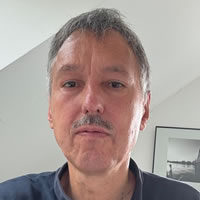
Prof. Zentek received his degree as veterinarian in 1985 from the Veterinary school of Hannover. He received his doctoral degree in 1987 and the degree as specialist in animal nutrition and dietetics in 1993. The habilitation (venia legendi at the Hannover Vet School) was finalized in 1994. He had an extraordinary professorship at the Hannover vet school from 1999-2001. After one year as research scientist in Bristol/UK, school of veterinary science, he was appointed on the chair of clinical nutrition at the Veterinary University of Vienna where he also became the head of the institute of nutrition. In 2005, he was appointed as professor at the Institute of Animal Nutrition, Freie Universität Berlin. The main research interests cover the role of nutrition for the intestinal microbiota and immunity of the gastrointestinal tract. Prevention of health disorders in domestic animals is one of the main topics of the institute with a specific focus on gastrointestinal diseases. Prof. Zentek had directed a collaborative research group on the mode of action of probiotics in pigs and has been involved in many European and national research projects on feed and food safety.
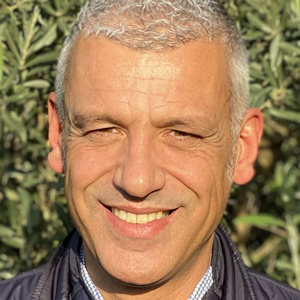
Prof Luciano Pinotti, is Full Professor in animal nutrition at the Department of Veterinary Medicine and Animal Sciences (DIVAS) of the University of Milan. In his career, Prof. Pinotti spent a year at ID-DLO in the animal nutrition group in Lelystad, the Netherlands, working mainly on intermediary metabolism in lactating dairy cows. Nowadays he conducts research in Feed quality and safety/ feed evaluation with emphasis on alternative feed ingredients like former food/ex food, insect meals (field sustainable animal nutrition). He is coordinator or partner in several national international and European projects. Currently supervisor of 4 PhD students and 3 Early stage researcher (M. Ottoboni orcid 0000-0003- 0123-3888; A. Luciano orcid 0000-0003-0600-9498; M. Mnoni orcid 0000-0002-8816-3757). Prof. Pinotti is member of the: (i) Technical-Scientific Committee of the Istituto Zooprofilattico Sperimentale della Lombardia e Dell’Emilia Romagna ‘Bruno Ubertini” (ii) Scientific Committee of the ASSALZO- Italian Feed Manifacture Association; iii) External Advisory Committee of the Instituto de Gabnadería de Montaña (IGM) Spain; iv) LEAF-Linking Landscape, Environment, Agriculture and Food Research Center Lisbon, Portugal; v) Member of 5 editorial boards of peer-reviewed journals. From 2019-25 President and from 2026 vice-President of Animal Nutrition Study Commission (N) of the European Federation of Animal Science (EAAP), and from 2023 he has been appointed Director of the Doctorate School of the University of Milan and is Rector delegate for PhD programs.
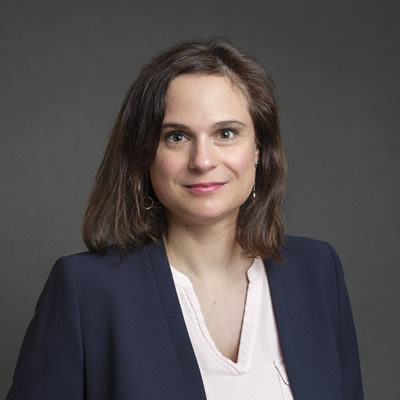
Dr. Agnès Narcy is a research scientist at INRAE, where she leads the “Nutrition, Livestock, Systems” team within the Poultry Research Unit. She holds a Ph.D. in Life Sciences and Human Nutrition from the Faculty of Medicine in Clermont-Ferrand, where she studied mineral metabolism and the protective effects of alkalinizing salts against chronic diseases.
Her research focuses on calcium and phosphorus metabolism in poultry and pigs, combining experimental and mechanistic modeling approaches to describe mineral digestion, absorption, and utilization at the digestive and metabolic levels. Her work extends to trace minerals (zinc, copper), investigating bioavailability, dissolution kinetics, and dietary strategies to reduce excretion and improve animal health.
Overall, her research aims to enhance skeletal health and animal robustness while supporting more sustainable feeding systems. Dr. Narcy co-directs the International Associated Laboratory “Nutri-Mod” and is actively involved in the European poultry science community.
Sokratis Stergiadis is Professor of Animal Science and Research Division Leader for Sustainable Agriculture and Food Systems at the University of Reading. His research focuses on feeding and managing ruminant animals to reduce greenhouse gas emissions, improve feed, energy and nutrient use efficiency at animal and farm levels, and enhance the nutritional quality of milk, dairy products and meat. His work also explores the role of the rumen microbiome in these processes and the predictive modelling of livestock emissions. He has extensive experience coordinating and contributing to multidisciplinary research projects funded by the European Commission and national governments that aim to improve the sustainability and resilience of the livestock sector. Sokratis actively engages in collaborative research with partners across the livestock value chain, supporting the development and evaluation of novel feeds, additives and supplement.
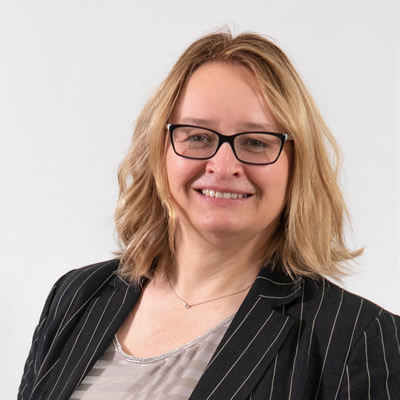
Lea Pallaroni holds a PhD in Agricultural Sciences from the Technical University of Munich and a degree in Agricultural Sciences from the Università Cattolica del Sacro Cuore. She has developed her professional career at the intersection of research, food and feed safety, and policy, with research experience in several international institutions including the European Commission’s Joint Research Centre and Texas A&M University.
Since 2006 she has been Secretary General of ASSALZOO, the Italian National Association of Feed Producers. She is actively involved in international policy dialogue on animal nutrition and feed safety, participating in several FAO expert groups. Currently she also serves as Vice-Chair of the FEFAC Animal Nutrition Committee, is member of the Italian Technical Committee on Animal Nutrition and Health, of the EFSA stakeholders Emerging Risk Platform contributing to various European and international initiatives on feed safety and sustainable feed systems.
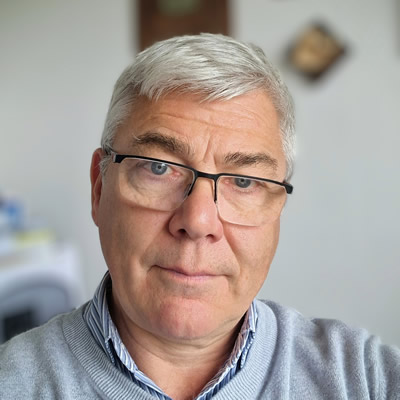
David trained as an applied biologist and entered the feed industry in 1981 as a quality controller for a UK premix manufacturer. After a period working in the human pharmaceutical industry as a quality auditor he returned to feed in a quality assurance role. In the early 1990’s he was involved in developing, manufacturing, and successfully selling a range of granulated trace elements and veterinary pharmaceuticals, made safer to handle using the Doxal BMP Technology. Using the Heubach Dustmeter he developed the concept of “Propensity to Dust” which led to a paradigm shift in the approach taken to workplace risk assessments for hazardous trace elements and pharmaceuticals. In 1999 he started a regulatory affairs consultancy business focussing on the emerging EU regulatory requirements for feed additives and has made successful feed additive applications in the EU and several other countries. David now concentrates on the complex regulatory environment surrounding feed flavourings as Regulatory and Quality Manager for Inroads International Ltd a major UK-based producer of flavouring premixtures for the global feed market.
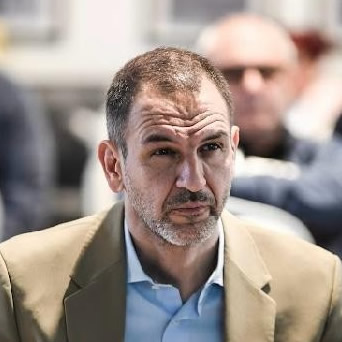
Roberto Marani was born in Bastia Umbra (PG) on May 26, 1974. He graduated in Agricultural Sciences in 1999 at the University of Perugia, also participating in an Erasmus exchange program at the Abertay University in Dundee, Scotland. After completing his studies, he began working as a feed formulation technician at the leading feed mills in Umbria. Over the years, he gained experience in feed technology, quality control, and feed formulation, working closely with production department, suppliers, and farmers. In 2014, he joined the Doxal Group, taking charge of the technical and commercial development of the “La Veterinaria” brand. He provides daily formulation and technical support in the field for both business customers (feed mills) and end customers (farmers). Over the years, he received many certificates of recognition for his participation in many courses, from Penn State University, the Israeli Dairy School, and the Pig Research Summit. In the recent years, he has contributed to the development of the Group’s export business by speaking at numerous seminars on animal nutrition, aimed at veterinarians, formulation technicians, and distributors of the main European, African, Middle Eastern, and some Asian countries.
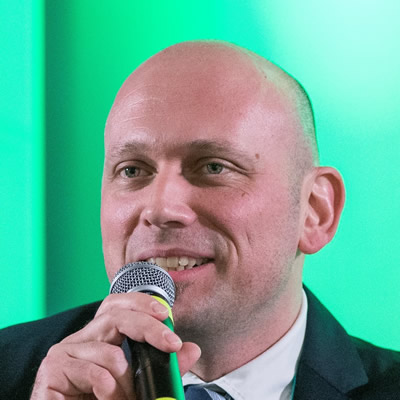
Andrea Bertaglio is an environmental journalist specialising in sustainability, agri-food and livestock topics. He writes for several newspapers, magazines, and online publications. In addition to collaborating with the European Federation of Animal Sciences (EAAP), he is among the coordinators of two communications projects aimed at countering misinformation about meat, livestock farming, and animal products: “Carni Sostenibili” in Italy and “European Livestock Voice” in Brussels. For years, he has focused his work on the impacts of agri-food production, starting with those related to livestock farming and animal production. He has written two books on these topics: “In Defence of Meat,” in which, in addition to recounting his professional and personal journey that led him to take a stand in defence of livestock farming, he debunks several myths about the production and consumption of meat; and “Veg Bad Faith”, soon to be published, which reveals, on the one hand, the religious and dogmatic approach of many Western environmentalists today, and, on the other, who benefits and therefore who literally finances the relentless narrative of animal-rights activists propaganda in the mass media.
Secretary-General for both the European Federation of Animal Science (EAAP) and the World Association for Animal Production (WAAP).
Andrea holds degrees in Animal Sciences from the University of Perugia (Italy) and advanced qualifications, including an M.Sc. and Ph.D. in Animal Genetics from the University of Nebraska (USA). He began his career at the Italian Association of Animal Breeders, later becoming National Technical Manager. He also led the International Committee for Animal Recording (ICAR) for 11 years. Andrea has coordinated two EU-funded research projects and contributed to over 20 others. He co-founded four animal science journals and has lectured in over 40 countries. He is also author of numerous research articles and dissemination pieces, in addition to writing book chapters centered on animal science. His work spans animal production, genetics, and sustainability, with a strong focus on global collaboration.
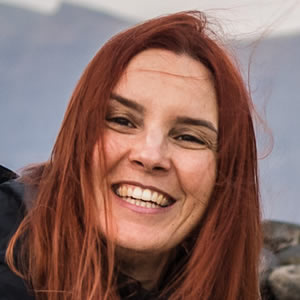
EAAP EU project manager
After an MA in European Studies earned in Belgium I attended a traineeship at the Council of the European Union. I have worked for international governmental bodies and private sector gaining professional experience in project management field, in particular regarding events organization, dissemination and administrative activities. In EAAP, I work for the EU project Unit, which has been involved in 13 EU projects, mainly in charge of the project communication and dissemination activities and I am responsible for the EAAP newsletter.
The Royal Canin Division, owner of the ROYAL CANIN® brand, is part of Mars, Incorporated and a global leader in Health Through Nutrition for cats and dogs. Founded in 1968 by French veterinarian, Dr. Jean Cathary, Royal Canin continues to push the limits of nutrition and knowledge in partnership with pet professionals and experts to fulfill its Purpose: A BETTER WORLD FOR PETS.
Its ambition is to go beyond providing science-based, precise nutritional solutions. This entails working together with stakeholders including breeders, pet owners, veterinarians, governments, and industry bodies to create an environment that nurtures and creates optimal health and well-being for cats and dogs.
Today the entire pet ecosystem is facing two key, interrelated challenges: a rise in unethical pet production and in extreme conformation.
This is why Royal Canin has developed CHOOSE HEALTH, a collaborative program of activities dedicated to fighting these two complex challenges. The initiative focuses on driving responsible pet ownership and responsible breeding, for a world that puts pet health first over physical appearance.
Neogen® provide worldwide genomic services that offer DNA testing solutions with quality data and rapid turn-around-time at an affordable price. As a global leader in companion animal genomic testing, we offer the platforms, services and expertise needed to enable research and innovation. When exciting discoveries and new insights are made, we provide the strategies and resources to bring those new findings to market where they can be used by researchers, breeders, owners and veterinarians.